Research
Augmenting rhythm in sport
(PhD, 2024 to 2027)
Rhythm is central to performance in sprinting, hurdling and jumping, yet it is hard to measure objectively. Coaches judge it by eye and ear, while sensor data captures timing in detail but misses the coach’s insight.
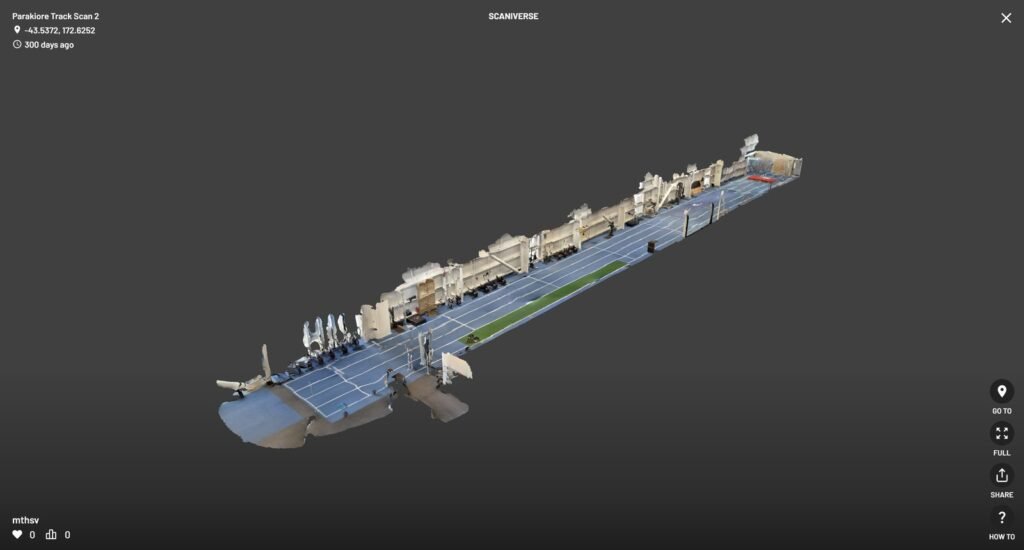
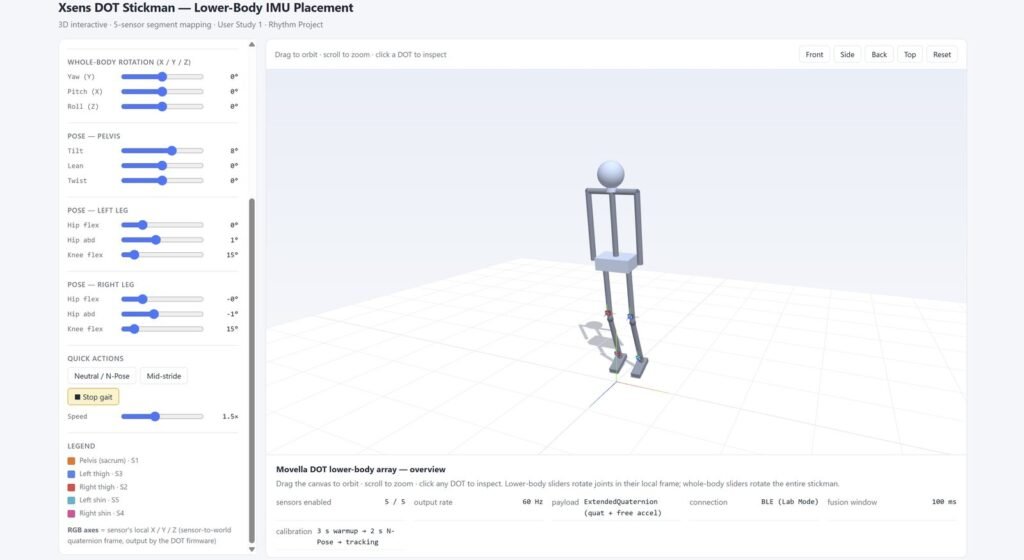
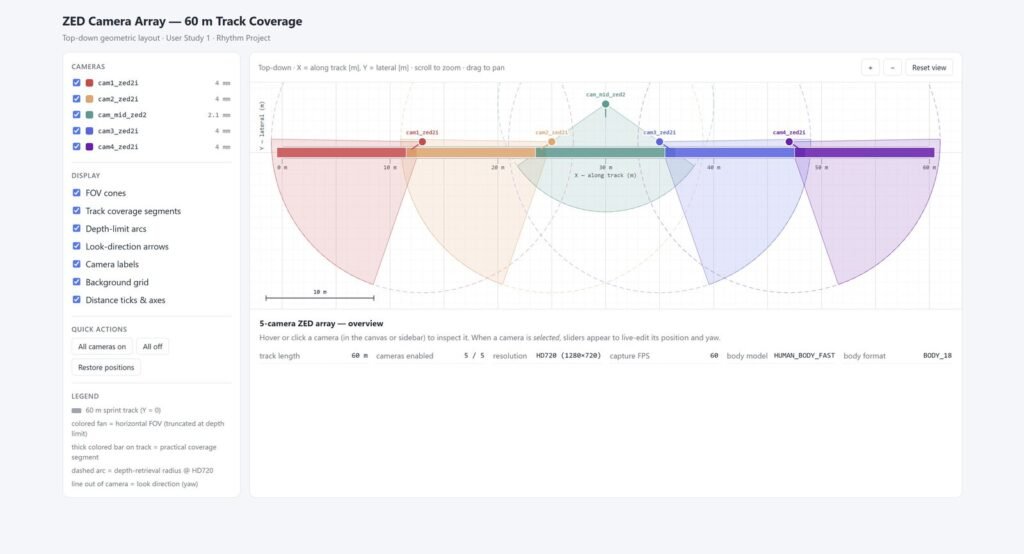
My PhD brings the two together. I am developing a personal “Rhythm Profile” for each athlete that combines sensor data with expert coaching judgement, and a real-time system that uses wearable inertial sensors, computer vision and adaptive audio feedback to help athletes refine their timing and coordination during training.
The project runs at HIT Lab NZ, University of Canterbury, in partnership with High Performance Sport New Zealand.
Supervisors: Prof Stephan Lukosch and Prof Rob Lindeman (HIT Lab NZ), and Matt Ingram (High Performance Sport New Zealand).
Research interests
Human-computer interaction
Extended reality (VR, AR, MR)
Sonification and auditory feedback
Sports technology
Computer vision
Machine learning
Wearable sensing
Publications
- Hossain, M. T., Lindeman, R. W., Ingram, M., & Lukosch, S. (2026). Augmenting rhythm: A scoping review of technologies and feedback modalities in elite sport. Sports Engineering, 29, 32. https://doi.org/10.1007/s12283-026-00562-7
- Hossain, M. T., Ameen, M. R., Islam, A., Faruqe, M. O., Qaosar, M., Rahman, A. F. M. M., Chakravarty, S. K., & Molla, M. K. I. (2026). Beyond ray-casting: Evaluating controller, free-hand, and virtual-touch modalities for immersive text entry. PECCII 2026. https://doi.org/10.1109/PECCII70991.2026.11661903
- Hossain, M. T., Islam, A., & Ameen, M. R. (2026). CountFormer: A transformer framework for learning visual repetition and structure in class-agnostic object counting. IEEE QPAIN 2026. https://doi.org/10.1109/QPAIN69676.2026.11546546
- Rahman, M. M., Ishmam, M. F., Hossain, M. T., & Haque, M. E. (2022). Virtual reality based medical training simulator and robotic operation system. ICRPSET 2022. https://doi.org/10.1109/ICRPSET57982.2022.10188546
- Biswas, S., Khan, M. I. A., Hossain, M. T., Biswas, A., Nakai, T., & Rohdin, J. (2022). Which color channel is better for diagnosing retinal diseases automatically in color fundus photographs? Life, 12(7), 973. https://doi.org/10.3390/life12070973
- Chowdhury, U. N., Chakravarty, S. K., Hossain, M. T., & Ahmad, S. (2019). Empirical mode decomposition based ensemble random forest model for financial time series forecasting. International Journal of Computer Science and Information Security.
- Chowdhury, U. N., Chakravarty, S. K., & Hossain, M. T. (2018). Short-term financial time series forecasting integrating principal component analysis and independent component analysis with support vector regression. Journal of Computer and Communications, 6, 51 to 67.
- Chowdhury, U. N., Rayhan, M. A., Chakravarty, S. K., & Hossain, M. T. (2017). Integration of principal component analysis and support vector regression for financial time series forecasting. International Journal of Computer Science and Information Security, 15(8).
- Chowdhury, U. N., Hossain, M. T., & Chakravarty, S. K. (2017). Financial time series forecasting using principal component analysis and support vector regression. IC4ME2-2017, pp. 176 to 179.
Full and up-to-date list: ORCID 0000-0002-6268-4482